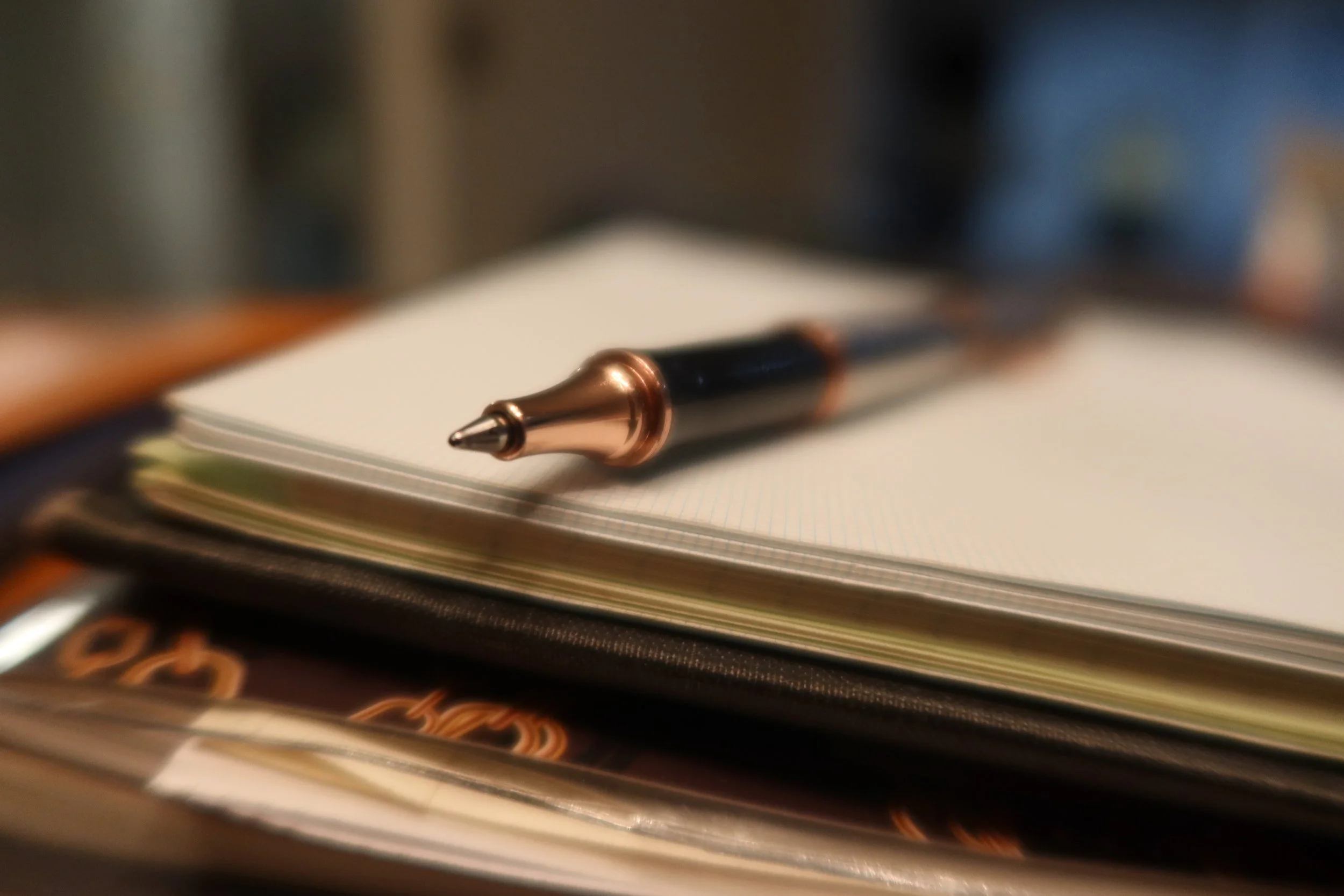
The liberated pen. My liberation.

My pen liberated me.

There were years, and people, and systems designed to ensure I would not speak, would not lift up my voice about what I had witnessed, about what had been done, about the distance between the “official story” and my story. Writing changed that. The pen gave me a voice when voice was silenced. Liberation, I learned, is not a state you arrive at. It is an action. Often, it is a series of them.

The Liberated Pen is not a single project. It is really four interlocking ones, built around the same conviction: that language is power, and that this liberation is both personal and political.

There is work here about justice — the right to name what happened to you personal, but also as collectives on a broader scale. There is creative work — writing born from objects, from ephemera, from the residue of a life. There is reflective practice: workshops, a manual in progress, the craft of turning inward. And there is 384, a reckoning with reading itself — with literacy as a civic obligation, with the book as a form of resistance, and with Paulo Freire's insistence that we must learn to read the word and the world.

Every thread here began as an act. You do not have to enter at the beginning. But you do have to begin.